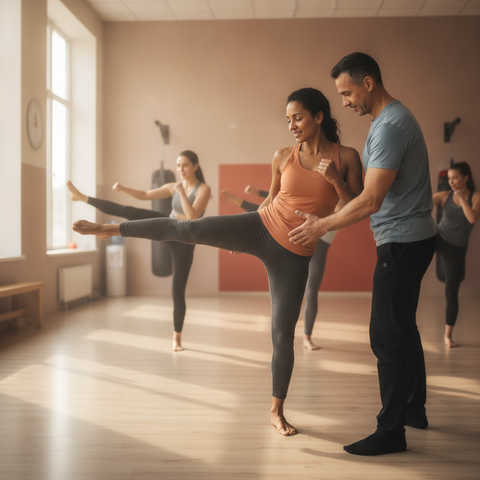
Stretch and Flow Yoga: How Long Benefits Last, and How to Keep Them
By Condition and Competition Kickboxing | October 9, 2026
A single yoga flow class usually gives noticeable relief, meaning less tightness and easier movement, for about 24 to 72 hours. The exact window depends on how tense you were going in, how much you sit afterward, sleep, hydration, and how consistent you are week to week. A lot of people first find us through a trial with friends and tell us the welcoming vibe and coaches who genuinely care made it easy to try something new. Stretch and Flow Yoga is one of the simplest ways to add recovery and mobility to your routine here in San Jose without needing to be “good at yoga” first.
The 24 to 72 hour window, and why it’s not the same for everyone
Here’s the honest timeline we see most often in Stretch and Flow:
- Right after class: you’ll often feel looser in hips, hamstrings, and shoulders. Breathing tends to feel easier too.
- 24 to 48 hours: this is the “sweet spot” when your body remembers the new range of motion and daily movement feels smoother.
- Up to 72 hours: many people still feel the benefits, especially if they do even a short 10 to 15 minute reset at home.
What changes that window? The biggest factor is what happens after class. If you go right back to long sitting, tight driving commutes, and short sleep, the “loose” feeling fades faster. If you take a few posture breaks the next day, it lasts longer.
San Jose’s mild Bay Area climate helps here. An evening class paired with a short, easy outdoor walk can be a practical cool-down. If you’re coming through the North San Jose / Old Bayshore corridor on US-101 or heading to or from SJC, it’s an easy stop that fits real schedules without asking you to overhaul your life.
Make Stretch and Flow Yoga last longer with 10 to 15 minutes a day
If you want that 24 to 72 hour benefit to turn into lasting mobility, consistency beats intensity. People notice our yoga classes work well as recovery and balance alongside harder training, and that’s exactly how we teach them. Here’s the plan we recommend for busy schedules in San Jose, Santa Clara, Sunnyvale, Milpitas, Cupertino, Mountain View, and Campbell.
1) A simple “day-after” 20 minute yoga flow
A 20 minute yoga flow the next day keeps your gains from disappearing at your desk. Keep it easy. You’re reminding your nervous system that the new range is safe.
- 2 minutes of slow nasal breathing, lying on your back
- Cat-cow into thread-the-needle for the upper back
- Low lunge with a gentle hamstring shift
- Down dog to ragdoll, bent knees encouraged
- Finish with 60 to 90 seconds of legs-up-the-wall
2) Hydration plus a real cool-down
If you rush out and stay tense, your body locks right back up. Drink water after class, then give yourself 5 minutes to downshift. In our facility, people appreciate that the environment is clean, welcoming, and organized. That matters, because it makes it easier to slow down instead of sprinting out the door.
3) Two posture breaks during your workday
Set a reminder twice a day. Stand up, open your chest, and do 3 slow neck circles each direction. Add 10 shoulder rolls and a gentle forward fold. It’s basic, and it works, especially for desk-bound tech professionals.
Quick reality check: If you only do one thing, do the 10 to 15 minute reset the next day. That’s usually the difference between feeling good for one evening and feeling better for the full 72 hours.
Why the “loose” feeling fades fast, and the fixes that actually help
Most early fade-outs come down to a few predictable patterns. None of this is about perfection. It’s about not undoing your work.
Skipping the cool-down: even 3 minutes of slow breathing in your car before you drive helps.
Going too hard the next day: if you’re sore, do gentle movement instead of forcing deep stretches.
Long sitting spells: break them up. Two quick stand-up resets beat one long stretch at night.
And sleep matters more than people want to hear. If you sleep poorly, your body guards range of motion. Plan your classes and recovery like you plan meetings.
When to come back: 2 to 3 classes a week, plus one short reset
If you’re aiming for lasting flexibility and less day-to-day stiffness, 2 to 3 Stretch and Flow Yoga classes per week is the sweet spot for most people. Pair it with that short reset flow on the “in-between” days. That rhythm is how you stop starting over every Monday.
Our community tends to stick because we meet you at your level. People regularly mention feeling comfortable fast, getting patient pointers when they’re new, and appreciating that the culture is welcoming instead of intimidating. If you’re balancing tech work, family life, and a body that’s tight from sitting, you’ll fit right in.
A simple next step
If you’re new, start with one class, then schedule your second within 2 to 3 days while the benefits are still fresh. If you want a preview of the vibe and pacing, read what to expect from your first Stretch and Flow Yoga class.
And if you’re focused on recovery habits, keep what to do after Stretch and Flow Yoga handy. It’s the small stuff that makes the results last.
Address: 1277 Old Bayshore Hwy, San Jose, CA 95112
Phone: +14086346163
Email: info@teamcck.com
If you’re comparing styles, we also laid out the differences in Stretch and Flow vs. vinyasa. It’s a helpful read if you’ve tried hot vinyasa flow yoga before and want something that supports recovery.
Quick answers before you commit to a yoga flow class
How long do Stretch and Flow Yoga benefits last after one class?
Most people feel an immediate difference, with the best mobility showing up in the next 24 to 48 hours. With basic maintenance, it often stays noticeable up to 72 hours.
How often should I do Stretch and Flow Yoga to maintain flexibility?
Two to three classes per week is a strong maintenance pace for most schedules. If you can only make it once weekly, add a 10 to 15 minute at-home reset on 2 other days.
Can Stretch and Flow Yoga help with neck and shoulder tension from desk work?
Yes, often. We focus on shoulder mechanics, upper back mobility, and breath that downshifts tension. If desk posture is the main cause, the best results come when you pair class with two short posture breaks the next day.