

Teamwork at Workplace: What to Do in the First 48 Hours After Your Work as a Team Session
By Condition and Competition Kickboxing | September 9, 2026
North San Jose / Old Bayshore corridor | 1277 Old Bayshore Hwy, San Jose, CA 95112 | +14086346163 | info@teamcck.com
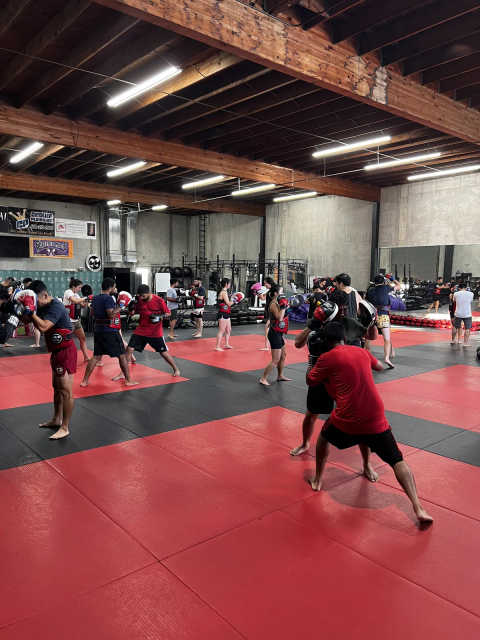
The most important rule after Work as a Team is simple: lock the decisions in while they’re still fresh. In our corporate team building class in San Jose, teams go through real partner work, combos, and conditioning that forces communication under pressure. That creates energy and clarity fast. If you don’t capture it within 48 hours, it turns into another “great session” that never shows up in your day-to-day teamwork at workplace. This guide keeps your follow-through short, measurable, and realistic for busy calendars.
The 24-hour recap that keeps working together as a team real
Within 24 hours, send a one-page recap. Keep it tight. If it takes more than five minutes to read, it’s too long for a meeting-heavy week.
Use this exact recap format:
Objective: the one sentence your team agreed on
Top 3 priorities: no more than three, written as outcomes
Owners + deadlines: one owner per action, with a date
Success signals: 1 to 2 measurable signs you’ll know in a week
In the San Jose tech corridor, the teams that keep momentum tend to do this asynchronously. A short Slack post, a pinned thread, or a project-board update works better than trying to squeeze in another debrief meeting.
Within 48 hours, take the recap and turn it into action. We generally recommend 1 to 3 follow-up tasks total. That limitation is the point. If you assign 10 things, you’ve assigned nothing.
Two “don’ts” that quietly kill results
- Don’t write vague tasks like “communicate better” or “be more aligned.” Convert them into behaviors you can see, like a daily standup change or a handoff checklist.
- Don’t schedule a long follow-up meeting “sometime next month.” Time kills urgency. If you need a touchpoint, keep it short and put it on the calendar now.
Week 1: a 15-minute check-in that respects real schedules
Schedule a one-week check-in before you leave the session. Fifteen minutes is enough if you keep it structured. North San Jose / Old Bayshore teams often have commuters and hybrid staff in the mix, so a brief video call or a written update plus reactions tends to land better than another hour-long meeting.
Use this 4-question agenda
- What did we complete (yes or no)?
- What changed in our day-to-day working together as a team?
- What’s blocked, and who owns unblocking it?
- What’s the next small experiment for the next 2 to 4 weeks?
Keep experiments short. Two to four weeks is usually the sweet spot. It’s long enough to see a pattern, and short enough that you won’t cling to a plan that isn’t working.
What to avoid in week one: adding new initiatives “because we’re motivated.” Motivation fades. Systems stay. Build the smallest system that makes follow-through automatic.
Tools that protect results: Slack threads, boards, and one owner
Aftercare for teamwork at workplace is mostly about reducing friction. Use the tools your team already opens every day. A Slack channel, a pinned thread, or a project-board card is better than a separate document that nobody revisits.
Our practical rules for follow-up tasks
- One owner per action. You can list helpers, but one person drives it.
- Deadlines in dates, not “ASAP.” If it’s urgent, pick a date within the week.
- Visible work wins. Put it somewhere the team already checks, so accountability doesn’t require extra meetings.
If your team is spread across Santa Clara, Sunnyvale, Milpitas, Cupertino, Mountain View, and Campbell, this is also the easiest way to keep everyone aligned without fighting calendars.
Simple metrics for corporate team building that teams actually track
You don’t need a dashboard to prove a Work as a Team session worked. You need one or two signals that matter to how your team ships work. Pick metrics you can check in a week, not a quarter.
Handoff clarity: fewer “who owns this?” pings, fewer reassignments, faster approvals.
Cycle time: a small reduction in time from “in progress” to “done” on a recurring work type.
Blocker speed: less time stuck waiting, and clearer escalation when something is truly blocked.
A quick note we repeat often: keep the metric connected to behavior. If you can’t point to what your team will do differently next Monday, the metric won’t move.
When to reach out to our team (and how we support follow-ups)
If your recap is done and tasks are assigned, you’re on track. Reach out if you’re seeing the common pitfalls: owners are unclear, deadlines keep slipping, or the “top three” keeps turning into a list of twelve. That’s usually a sign the follow-up needs to be simpler, not bigger.
“Staff was super kind and got me setup really quick.”
one of our first-time clients
That same approach is how we handle corporate teams. If you need a quick reset, we’ll keep it practical. Many teams around San Jose prefer short, asynchronous follow-ups, and we’re happy to support that with a brief virtual check-in or an on-site touchpoint that fits your schedule.
Helpful next steps:
- If you’re planning the next session, read what to expect from your first Work as a Team class.
- If missed deadlines are the issue you’re trying to solve, use Work as a Team for missed deadlines as your follow-up framework.